Working on AI for Good
Coen van den Elsen
AI Research Engineer & Machine Learning Scientist building AI for science, nature, and society.
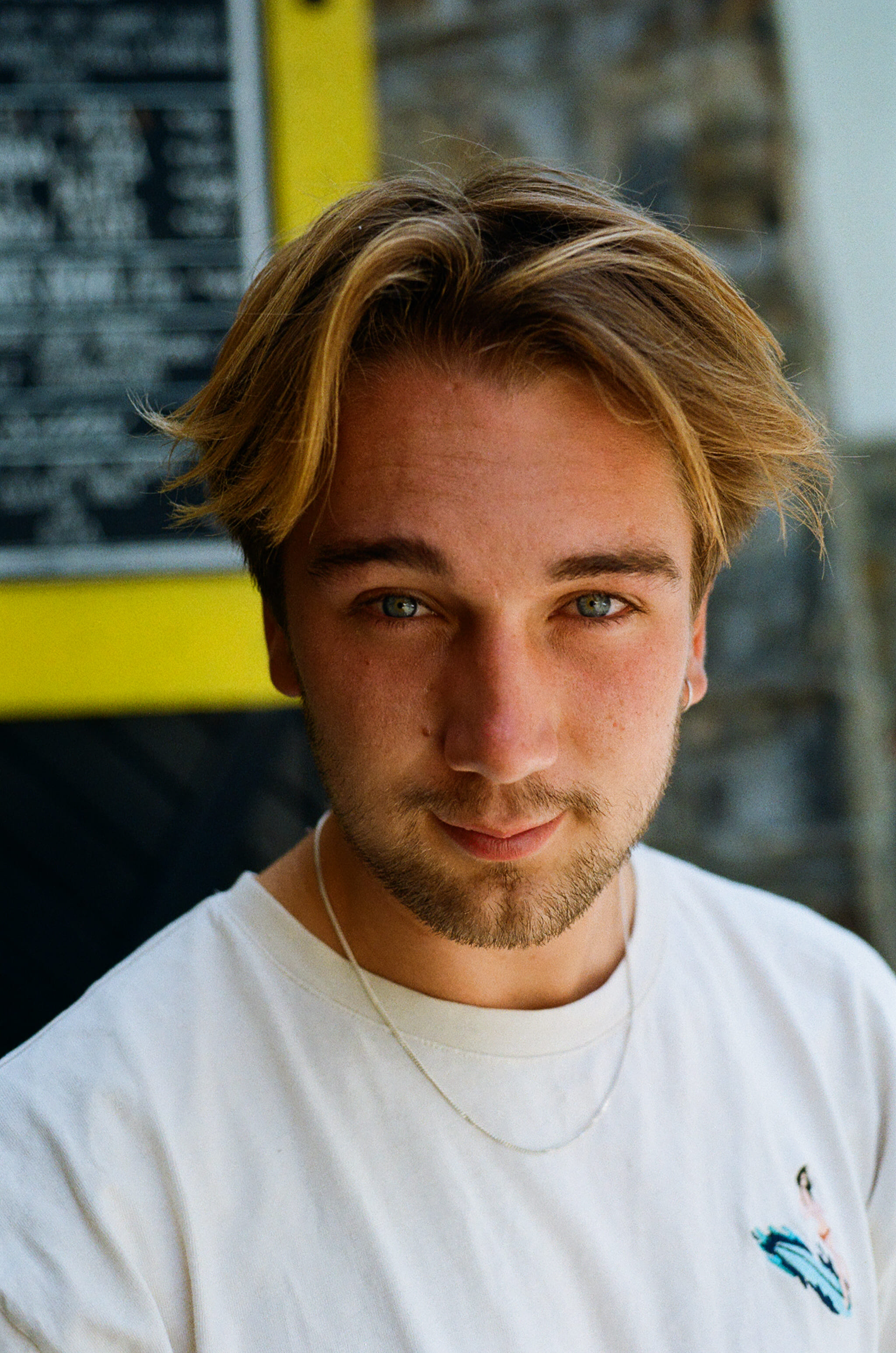
Currently, I am an AI Research Engineer at OceanOS, building a marine foundation model using geospatial data for oceanic intelligence and conservation.
My goal is to contribute meaningfully to global sustainability and social challenges by combining my interest in nature, human behavior, and culture with my passion for technology, particularly AI. Rather than just focusing on research, I am deeply committed to building and implementing AI systems in the real world to create tangible, positive impact. My Bachelor’s in Beta-gamma with a specialization in Artificial Intelligence taught me to approach complex problems from multiple angles, while my Master’s in AI gave me the practical tools needed to deploy AI solutions for real-world issues.
I’ve traveled across Africa, Central America, and Asia, and spent 7 months in Cape Town studying Marine Biology and Development and Sustainability at the University of Cape Town through an exchange program. These experiences broadened my cultural perspective and deepened my global awareness.
Developed a marine foundation model using geospatial data to support oceanic intelligence and marine conservation.
Led tutorials for ~30 first- and second-year students in Programming, Linear Algebra, Calculus and Optimisation, and Information Visualization. Mentored ~30 second-year students and led the Scientific Programming course for all ages and educational backgrounds.
GPA 8.1
Marine Resources and Geography, Development and Sustainability
Specialization in Artificial Intelligence. Honors program.
GPA 8.02/10
How geometric inductive biases shape weather-model skill and physical fidelity, isolating one design choice at a time on global ERA5. Introduces Platonic-Erwin, a linearly-scaling ball-tree transformer with roto-translation group equivariance. Symmetry helps as an inductive bias but not as a hard constraint: scale buys deterministic skill, geometry buys spectral fidelity, calibration and parameter efficiency.
Supervisor: David Wessels. Examiner: Erik Bekkers.
Published at SIGIR 2025. Replicated and extended NevIR to assess IR models' handling of negation. Found only cross-encoders and listwise LLM re-rankers achieved moderate performance. Showed poor generalization when fine-tuning across negation datasets.
Proposed a novel class of equivariant transformers. Leveraged simplicial complexes and Clifford algebra to capture full symmetry group equivariance.
Insights, tutorials, and research musings.
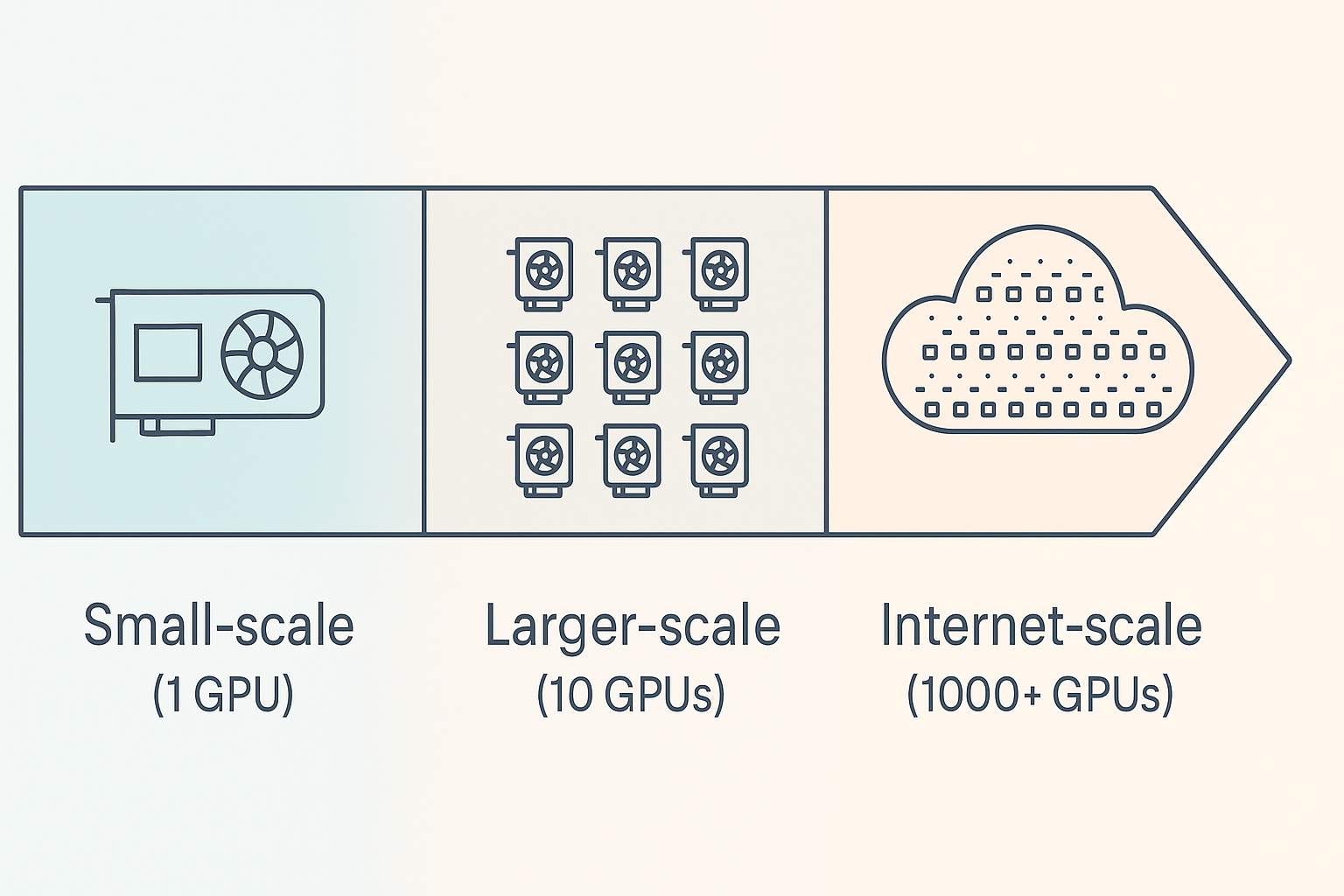
A guide on scaling machine learning from small to larger training setups.
Read more